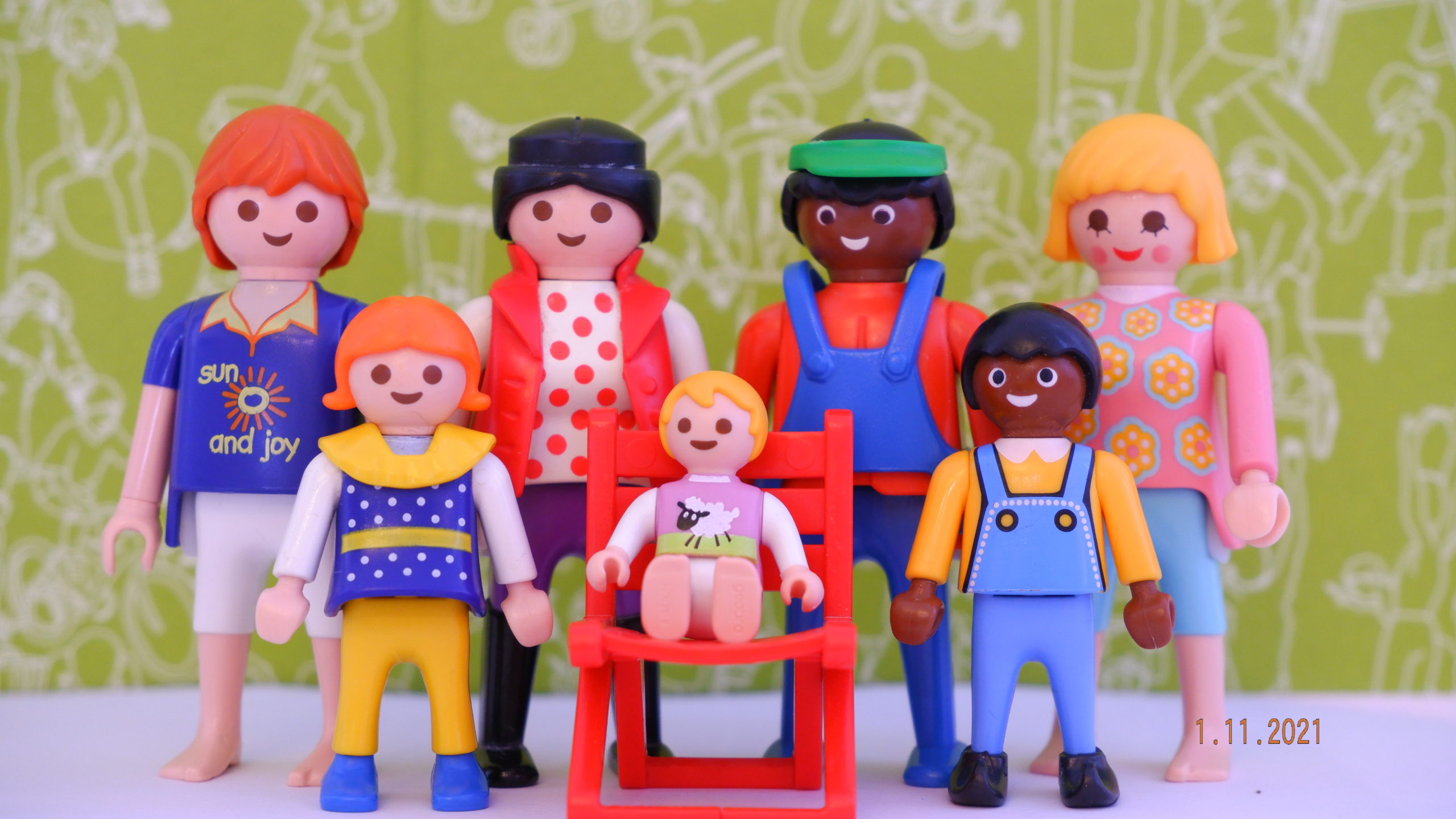
Family Report 2024 published
Family relationships provide stability. Parents desire a partnership-based division of responsibilities between family and career. Despite crises, parents with minor children look to the future with confidence. These are three key findings of the 2024 Family Report, published by the Federal Ministry for Family Affairs on May 15, the International Day of Families. Based on official statistics, scientific studies, and representative population surveys, the Family Report describes the diverse living situations of families in Germany. Now in its eighth edition, the Family Report offers a comprehensive overview of long-term trends, addresses current social developments, and provides information on family policy measures and programs of the Federal Government.
Federal Minister for Family Affairs Lisa Paus: “The report gives us, as the Federal Government, momentum for a strong family policy. When more than 90 percent of those surveyed support the increase in child benefits, for example, that sends a strong signal. I personally advocated for the largest increase in child benefits since the mid-1990s, which took place at the beginning of last year. This also allowed us to counteract the inflation of recent years. I welcome the fact that our current family policy initiatives are receiving broad support overall. In addition to financial support, families also need good childcare options. The Daycare Quality Act is a success story in this regard, and one we intend to continue. The focus is on improving the staff-to-child ratio, language support, and the urgently needed recruitment and retention of qualified staff.”
Key findings of the 2024 Family Report:
- The crises of recent years have hit families particularly hard. Despite these burdens, parents with minor children are comparatively optimistic about the future. 46% are looking forward to the future, compared to 42% in the general population.
- Family relationships provide support during times of upheaval. On average, 82% of the population report finding help within their families during difficult times. Furthermore, people with children in their household are generally more satisfied than those without children.
- The German government's family policy initiatives enjoy particularly high approval ratings – both among the general population and among parents. 92% of parents approve of the increase in child benefits. 70% welcome the introduction of a basic child allowance, and 77% support the introduction of a family start period.
- For most people, family represents something positive, yet it is lived very differently . The lives of families in East and West Germany still differ. For example, there are more single parents (25% vs. 19%) and more unmarried parents (21% vs. 10%) in East Germany than in West Germany.
- The childcare rate for children under three years of age in daycare facilities has risen again (36.4% in 2023) – compared to 2006, the childcare rate has almost tripled.
- Parents spend more time with their children than they did 10 years ago (fathers +28 min/day; mothers: +33 min/day). Despite fathers' increasing willingness to take on responsibility, mothers still shoulder the majority of childcare.
- Many parents desire an equal division of responsibilities between family and career. However, they often struggle to put this into practice. 75% of mothers in two-parent families take on the majority of childcare, but only 48% consider this ideal.
- Parents who share caregiving and paid work equally report significantly more often a good family climate , close relationships between parents and children, and mutual support.
- Fathers are less likely to be the sole breadwinner than in the past. The proportion of families with a traditional single-earner model fell from 33% in 2008 to 26% in 2022. The proportion of working mothers rose from 63% to 69% during the same period.
The Family Report is published by the Federal Ministry for Family Affairs and has been appearing since 2009. Until 2014 it was published annually, since then every two to three years. The most recent Family Report was published in December 2020.
Source: Federal Ministry for Family Affairs, Senior Citizens, Women and Youth, Press Release , May 13, 2024