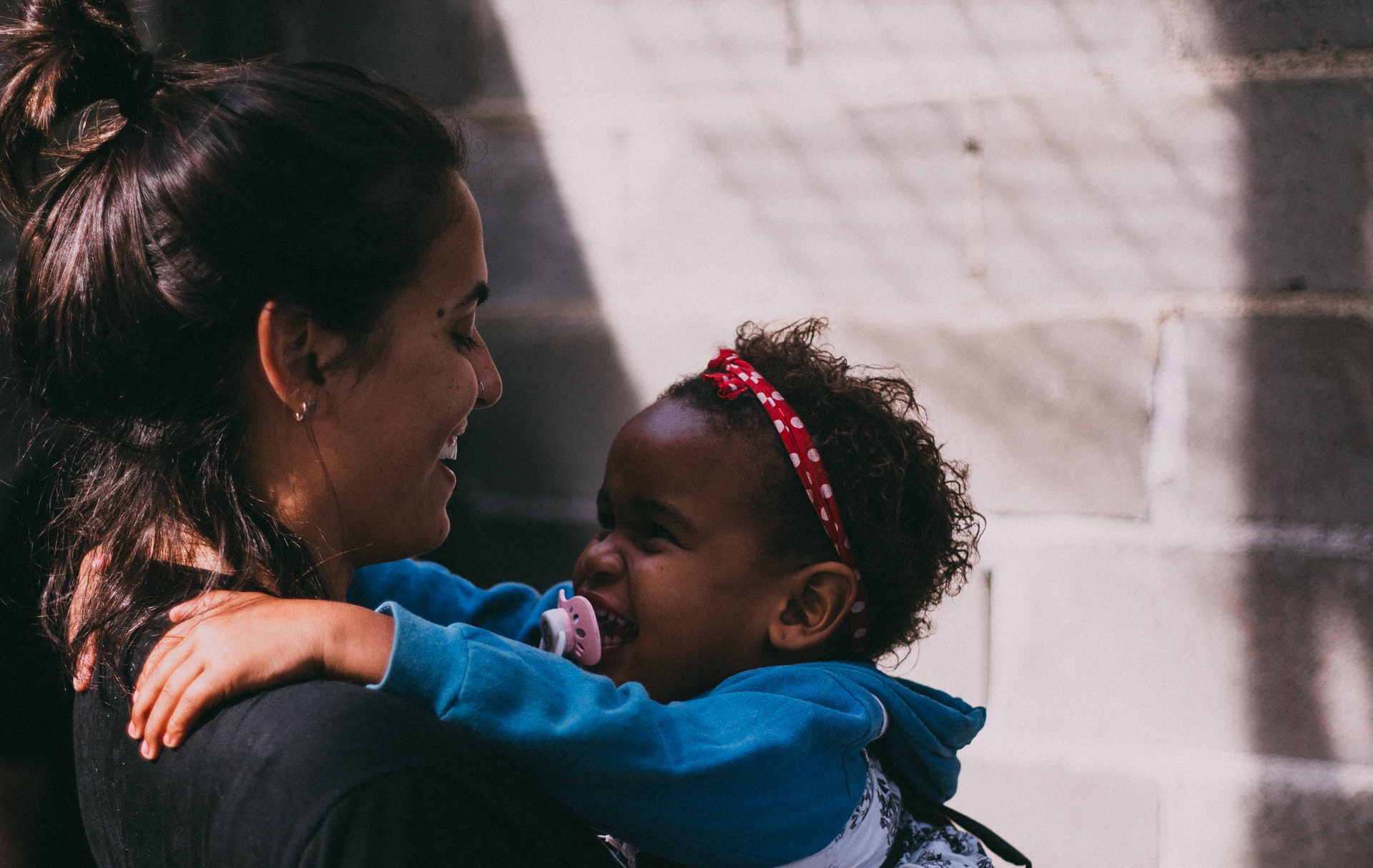
The Tenth Family Report (2025) examines the living conditions of single and separated parents, focusing on the dynamics of their life course. Federal Family Minister Lisa Paus presented the Tenth Family Report to the Cabinet.
The majority of single parents are mothers
According to the report, in one out of every five families in Germany, children live with a single or separated parent. This equates to approximately 1.7 million single parents with children under 18. The majority of single parents are mothers. The proportion of fathers is growing and reached 18 percent in 2023.
The risk of poverty is significantly increased
According to the report, single mothers are particularly at risk of poverty. Although they are predominantly employed, many rely on supplementary social benefits. Many mothers focus on care work and leave the workforce or reduce their working hours, thereby incurring significant financial risks. Consequently, the risk of poverty for single mothers is approximately three times higher than that for mothers in partnerships.
Single parents also benefit from family benefits
“I thank the Family Report Commission, chaired by Professor Michaela Kreyenfeld, for their outstanding work. The Family Report shows how single and separated families are faring in Germany. The report makes it clear that the risk of poverty is particularly high for single parents. Therefore, it is good that the Federal Government has massively expanded benefits for families,” said Federal Minister for Family Affairs Lisa Paus. “Hardly any Federal Government has provided as much money for families as this one. This is also reflected in the largest increase in child benefits since 1996, from which single parents in particular will benefit,” the Minister added.
Child supplement increased several times
“The child supplement supports single parents and low-income families. Since 2021, it has been increased several times, from a maximum of €205 to the current maximum of €297 per month per child. We have also significantly increased child benefit – most recently in January of this year to €255 per month,” Lisa Paus explained. “I still believe targeted support for single parents is necessary, for example through a tax credit. This should also be a goal of a future federal government,” the minister added.
Single parents especially need reliable childcare
"The family report also shows that single parents in particular depend on reliable childcare to be economically independent. Only those who can rely on daycare centers can go to work. Therefore, continued investment in childcare is needed," said Minister Lisa Paus.
"With the Daycare Quality Act, we are therefore supporting the responsible federal states with a total of four billion euros this year and next – for high-quality care and sufficient qualified staff. This particularly benefits single parents. The funding for the Daycare Quality Act should be made permanent, as this is an essential prerequisite for harmonizing educational standards. Developing common quality standards to strengthen early childhood education is an important shared goal of the federal and state governments."
Politics must keep pace with the realities of family life
“The diversity of families after separation and divorce has increased. Even though the shared custody model, at five to ten percent, is still not very common in Germany compared to other European countries, most parents assume responsibility for raising, caring for, and supporting their children,” says Prof. Michaela Kreyenfeld, Chair of the Family Report Commission. “It is time to adapt law, policy, and statistics to these changed conditions in order to keep pace with the realities of family life and provide adequate support for everyone. The Family Report provides important starting points in this regard,” adds the sociology professor.
Can single or separated parents receive support?
The Family Reporting Commission has formulated four key objectives that its recommendations for action are intended to achieve:
1. Promote the economic independence of mothers and fathers
To support the economic independence of both parents, and especially mothers, throughout their lives, the expert commission proposes, among other things, a reform of parental leave benefits, the further expansion of childcare facilities, and greater consideration of care work in labor law.
2. Strengthening shared parental responsibility
Fathers today are more involved in childcare than previous generations, while at the same time, mothers' employment rates and working hours are steadily increasing. Family law should reflect the diversity of a changing family life and regulate all childcare models equally.
3. Consider vulnerabilities
Single parents and their children are particularly often affected by or at risk of poverty. The commission recommends reducing the complexity of social welfare law and facilitating access to the labor market. Additional costs incurred through visitation and shared care when children grow up in two households should be covered by a flat-rate supplementary allowance.
4. Recognize and promote the diversity of family forms
The family constellations that result from single and separated parenthood are as diverse as the paths to parenthood. The expert commission recommends adequately recording this diversity of families and further developing statistics and evaluation research in line with current standards.
The Tenth Family Report
The German Federal Government is mandated by the German Bundestag to submit a report on the situation of families in the Federal Republic of Germany, including a statement from the Federal Government, at least every other legislative period. An independent commission of experts was commissioned in January 2023 to prepare the Tenth Family Report, and two additional experts were subsequently added to the commission.
A multitude of data sources underlie the data
For the report, the commission evaluated a wide range of data sources. Key official data sources include the microcensus and time-use studies. Central social science survey data are provided, among others, by the German Youth Institute's survey "Growing Up in Germany: Everyday Worlds" (AID:A), the Socio-Economic Panel (SOEP), the Family Demographic Panel (FreDA), and the DJI Childcare Study (KiBS).
Source: Federal Ministry for Family Affairs, Senior Citizens, Women and Youth, 15 January 2025